
How to Become an AI Prompt Engineer in 2026: The Step-by-Step Roadmap

How to Become an AI Prompt Engineer in 2026 (6-Month Roadmap)
In our last post, we talked about how AI Prompt Engineering is the trendiest new job of 2026 and how it pays six figures. You don’t need a computer science degree to get this job. Now comes the hard part: how do you really get into this field?
This step-by-step guide is for people who have never done this before. This guide will teach you exactly what to learn, where to practice, and how to get your first job within six months, whether you’re a recent graduate, changing careers, or a professional trying to improve your skills.
Why Prompt Engineering is the Gateway to AI
It’s crucial to know why this ability is so useful before you start learning how to do it. Businesses need more than simply people who can talk to AI; they need experts who know how to use prompt engineering to write code, make marketing copy, and look at complicated data. This is what makes generative AI for business possible.
 WhatsApp
 Telegram
 YouTube
 Instagram
Essential skills for prompt engineering

Essential Skills You Need to Master
You don’t need a degree in computer science, but you do need a certain set of skills. In 2026, here’s what employers will want.
1. Language Craftsmanship
At its heart, prompt engineering is all about writing with perfect accuracy. You have to be able to:
- Make sure your directions are clear and easy to understand.
- You may control tone, format, and structure by choosing your words carefully.
- Use markers, delimiters, and syntactic structuring in a smart way
- Change the terminology to fit diverse groups of people and situations
English majors, technical writers, and journalists generally do well in this sector because of this. Your superpower is being able to speak clearly.
2. Understanding AI and NLP Fundamentals
You don’t have to build models, but you do need to know how they work:
- How to train and test big language models
- Ideas like tokens, temperature, top-p, and context windows
- Tokenization, sentiment analysis, and text summarization are all parts of Natural Language Processing (NLP).
- The pros and cons of different models (GPT-4, Claude, and Gemini)
You may quickly create this foundation by taking an ai prompt engineering course.
3. Prompt Engineering Techniques (The Toolbox)
You need to know how to use specific prompting methods in addition to fundamental writing.:
| Technique | Description | Example Use Case |
| Zero-Shot Prompting | Direct directions without any examples | Easy questions and easy jobs |
| Few-Shot Prompting | Give two or three instances to show patterns. | Code generation and outputs that are particular to a format |
| Chain-of-Thought (CoT) | Encourage thinking through each step | Hard math, logic puzzles, and analysis that takes more than one step |
| Role Prompting | Give a specific person | “Be a career coach for new college graduates.” |
| Contextual Prompting | Give some background information | “Based on our sales data from the third quarter, please recommend marketing strategies.” |
*Sources: *
4. Iterative Testing and Debugging Mindset
“Write once, run forever” is not something that happens very often in prompt engineering. It’s a process that goes through several steps:
- A/B testing multiple variants of a prompt versus the expected outputs
- Keeping track of changes with version control tools like Git
- Using metrics like response time, token consumption, and accuracy of facts to measure performance
This engineering way of thinking—treating prompts like code that needs to be tested and improved—sets experts apart from novices.
5. Python (Optional but Valuable)
You can start without coding, but mastering Python opens doors:
- Look at the data that language models make
- Use NLP libraries like spaCy and NLTK.
- Set up automated testing routines
- Over time, move into more technical AI jobs
6. Domain Expertise
This is your secret weapon. Businesses are choosing AI-enabled subject experts over generalists more and more. If you know a lot about healthcare, finance, law, or marketing, you can write AI prompts for marketing campaigns or financial analysis that pure technologists miss.
Your Step-by-Step Guide to Becoming a Prompt Engineer
Here’s a practical timeline to launch your career in 2026.
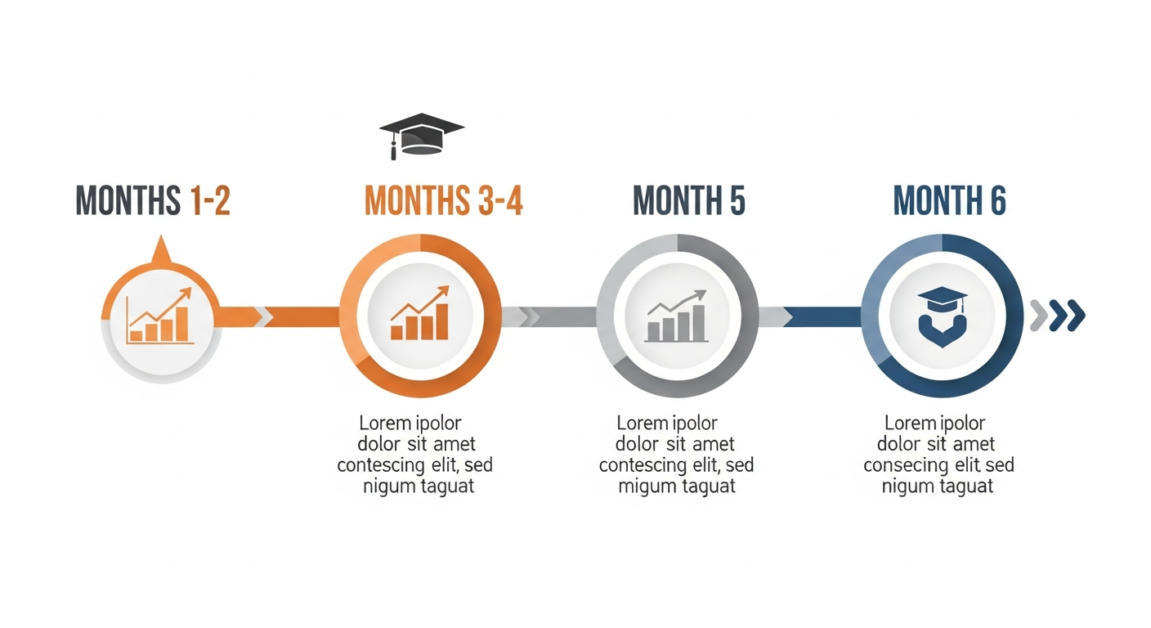
Step 1: Learn the Basics (Months 1-2)
To develop a strong foundation, start with free or cheap courses.:
- Google Prompting Essentials (Free, 5 modules) is useful and easy for beginners.
- DeepLearning: ChatGPT Prompt Engineering for DevelopersAI/Coursera: Andrew Ng teaches a free audit option.
- IBM’s Generative AI: Prompt Engineering Basics (Coursera) is a free course that teaches you how to optimize LLMs.
Every day, try out ChatGPT, Claude, or Gemini for a while. Write down the best ways to use AI prompts and what works for different projects in a diary.
Step 2: Specialize and Practice (Months 3-4)
Learn more about strategies and establish muscle memory:
- Sign up for Vanderbilt’s Prompt Engineering Specialization on Coursera for $49 a month to learn more advanced techniques and ethics.
- Use Hugging Face and OpenAI Playground to practice
- Join communities like Discord AI engineering hubs and Reddit’s r/PromptEngineering.
- Learn how to utilize tools like LangChain to connect prompts and create workflows.
Begin looking into other uses, such as prompt engineering for generative AI PDF creation or data analysis.
Step 3: Build Your Portfolio (Month 5)
You need to show, not just tell. Create a portfolio with:
- 10 to 15 prompt templates for different jobs, like marketing, coding, analysis, and customer service
- Case studies that show how you work: problem → first prompt → iteration → final output
- Metrics that show progress, such better accuracy, lower costs, and so on
- GitHub repository that shows off your work
As a side project to show off your skills, think about making a free AI prompt generator tool.
Step 4: Start Applying (Month 6)
Companies that are actively looking for quick engineers:
- Companies that put AI first are OpenAI, Anthropic, Hugging Face, and Cohere.
- Google DeepMind, Microsoft, Amazon AWS, Meta, and IBM Research are all big tech companies. Deloitte, Accenture, and PwC are all consulting firms.
- Industries: healthcare systems, banks, and big box stores
There are more than 28,000 job postings on LinkedIn and Indeed as of early 2026. This means that there are a lot of jobs available for people who know how to become a prompt engineer for AI.
Step by step roadmap to become prompt engineer
The Future of Prompt Engineering: Evolution, Not Extinction
You might have heard that “prompt engineering is dead.” The truth is more complicated—and more hopeful.
The role is changing, not going away, as AI models get better. What’s changing:
- From Pure Prompting to System Design: Smart models or automated systems are taking over entry-level prompt writing. Now, the important thing is to create complicated workflows that use several AI agents, retrieval systems, and business logic.
- Rise of Agentic AI: Businesses are building self-driving systems where many AI agents work together to get things done. To do this, you need to know how to organize agents, handle dependencies, and make feedback loops, all of which are based on the basics of prompt engineering.
- Need for Hybrid Roles: The most in-demand professions are AI-enabled domain experts, who have a lot of expertise about a specific field and are also good at engineering.
In other words, prompt engineering is becoming a competence that opens doors. It’s not a dead-end specialization; it’s your way into the bigger realm of AI development.
Emerging Career Pathways
You can grow as a prompt engineer into:
- AI Agent Designer: Making systems with several agents that can work on their own
- LLM Specialist: Very knowledgeable on how models work and how to fine-tune them
- AI Product Manager: In charge of making products that use AI
- Chief AI Officer: Making decisions about how the company will use AI
Conclusion: Your Moment Is Now
There have been times in the history of technology when there have been “opportunity windows”—short times when hurdles are low, demand is high, and dedicated people can change their careers. In 2026, the door is wide open for AI Prompt Engineering.
Luisa Esposito, project manager at EIT Campus, said, “The best thing about these AI roles is that you don’t have to compete with people who have been doing it for 10 years because large language models haven’t been around for 10 years.” This gives those who want to change careers a unique chance to swiftly learn the ropes and start out on a level playing field with other new people.
The only real barrier? Your commitment to learning.
Begin now. Sign up for a free course. Try out an AI model. Be a part of a community. In six months, you may be applying for jobs that pay six figures and let you work on things that really change the future.
The AI revolution isn’t on its way; it’s already here. And it’s engineers who are teaching it how to talk.